
NEWS
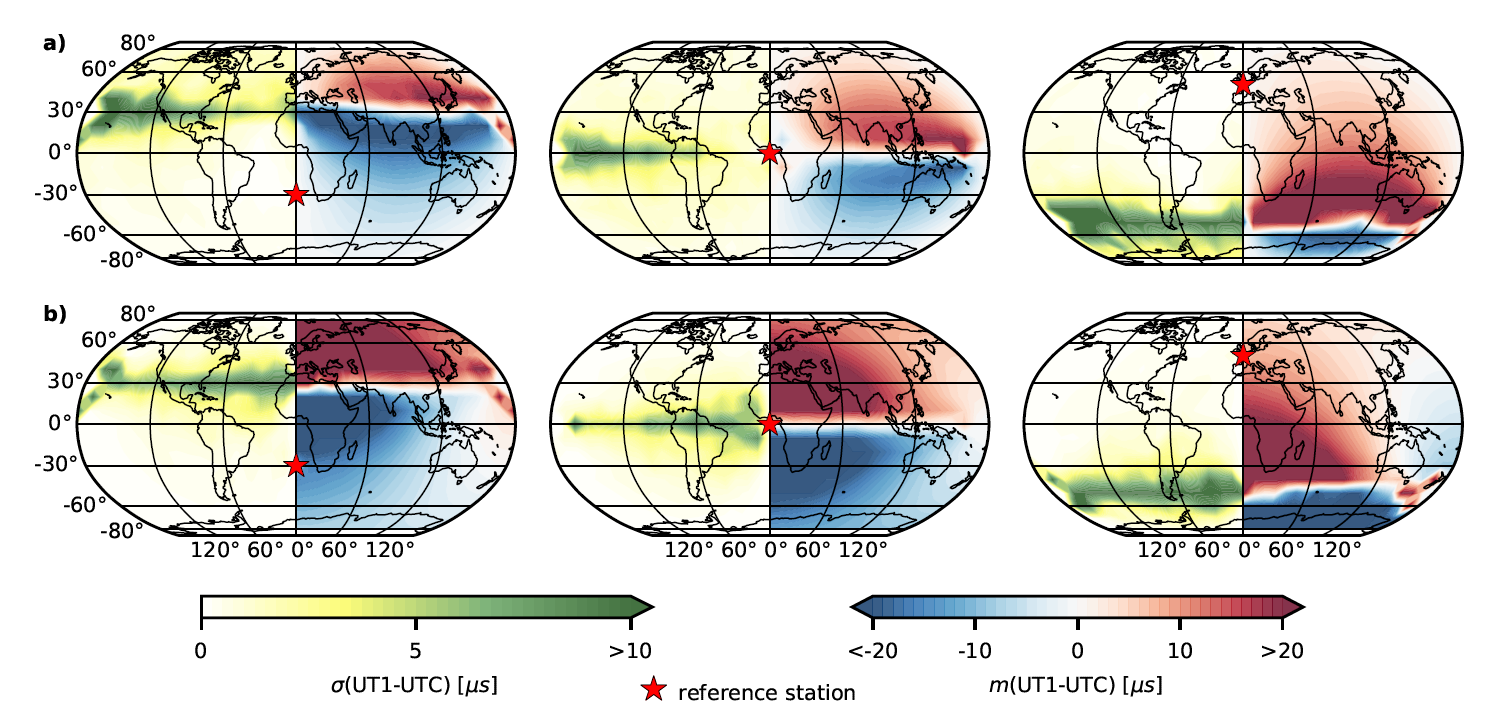
Paper on the importance of accurate a priori information for VLBI Intensive sessions published
A paper on the importance of accurate pole and station coordinates for the determination of UT1 with VLBI Intensive sessions (simulation study) has been published in the Journal of Geodesy. Check it out!
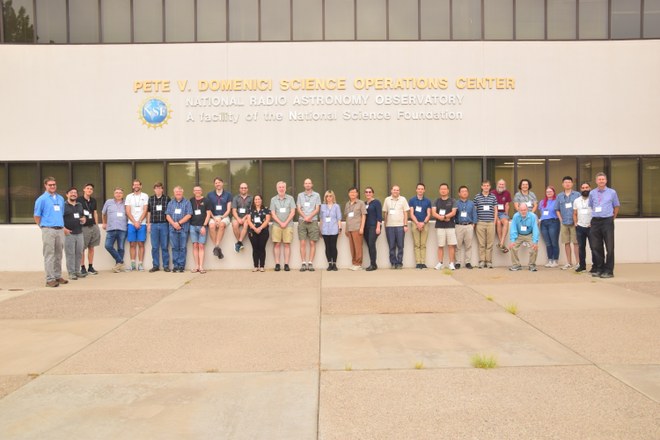
15th DiFX Users and Developers Meeting 2023
Jakob attended the “15th DiFX Users and Developers Meeting” in Socorro, New Mexico, USA, from September 11 to 15, 2023. This annual meeting is for the future planning, improvement, and documentation of the high-performance DiFX software. The Vienna Correlation Center uses DiFX in its operational and scientific work to process (correlate) raw VLBI data. The meeting was hosted by the National Radio Astronomy Observatory (NRAO). It was attended by more than 30 participants in person and many more online from 19 different international scientific institutes and agencies. Jakob gave a 30-minute talk on VGOS correlation at the Vienna Scientific Cluster and simulations of VLBI raw data. Some highlights of the many great talks were from H. Rottmann on energy efficient processing using SLURM at the Max-Plank-Institut für Radioastronomie in Bonn, from W. Brisken on the new developments of the DiFX simulation tool of VLBI raw data, from H. Ueshiba on automated correlation at the Tsukuba correlator, from J. Skeens on a combined interferometer approach of VLBI and GNSS data, and from A. Deller on the use of GPUs for VLBI correlation. In addition to the presentations, there were panel discussions on relevant topics such as the switch to GIT for version management of DiFX code.
We at Vienna Correlation Center are pleased to host the next DiFX Meeting 2024 in Vienna and look forward to many great presentations, interesting panel discussions, and a productive DiFX hackathon.
Picture: NRAO
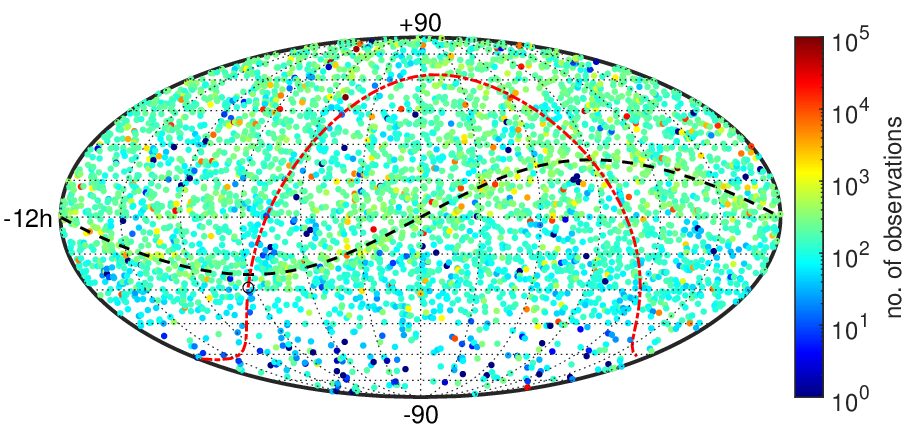
Paper on the latest Vienna VLBI reference frames published
A paper on the computation of global reference frames from very long baseline interferometry (VLBI) observations at the Vienna International VLBI Service for Geodesy and Astrometry (IVS) Analysis Center (VIE) has been published in A&A (here).
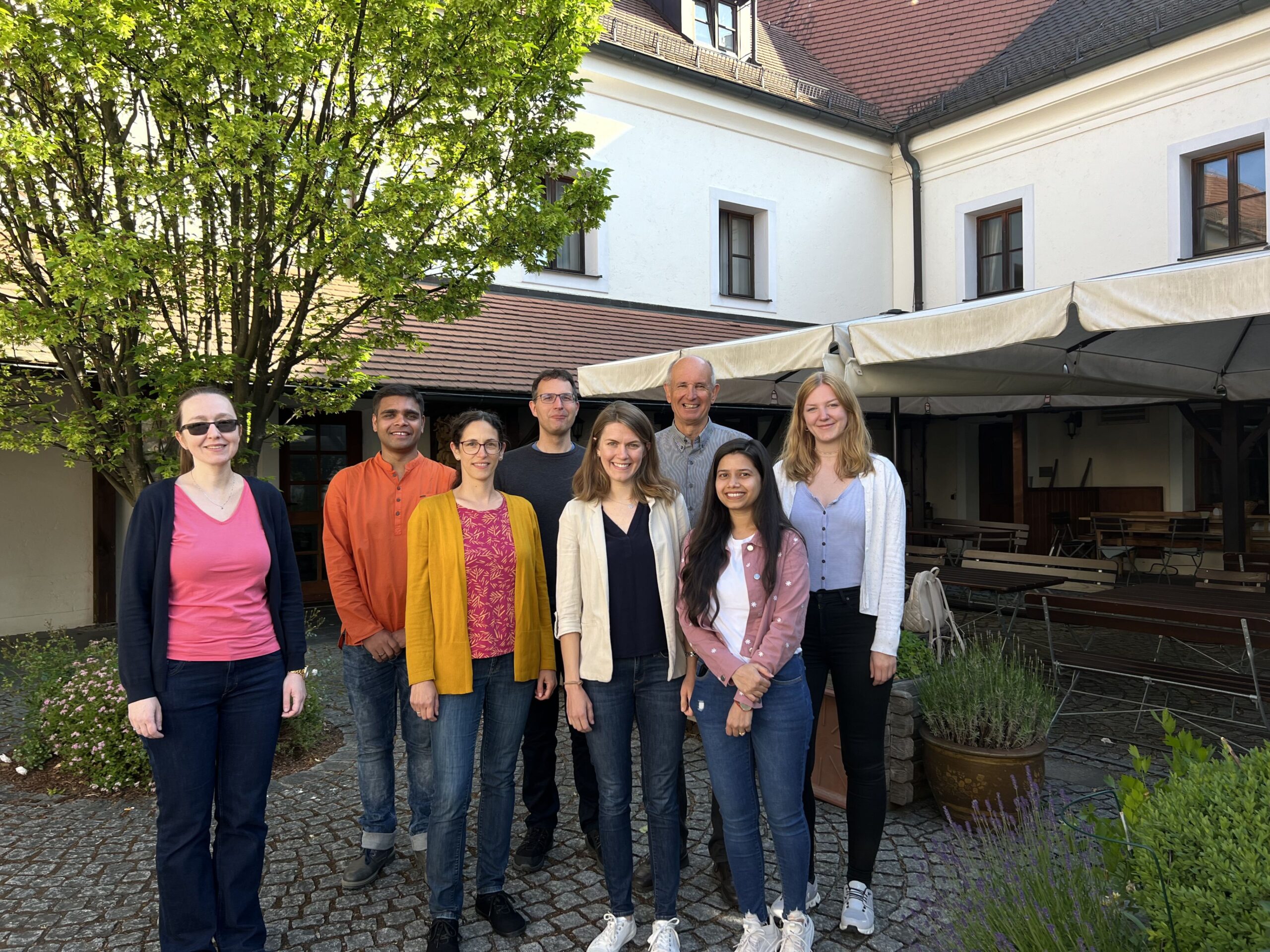
Vienna VLBI Group at EVGA 2023
- Earth orientation parameters estimated from recent Australian mixed-mode and Southern Intensive sessions (Sigrid Böhm et al.)
- The benefits of the Australian mixed-mode program (2018 -2023) for the celestial reference frame at S/X-band (Hana Krásná et al.)
- Neglected issues of terrestrial datum definition in VLBI (Lisa Kern et al.)
- Cross-polarization bandpasses of VGOS antennas (Frédéric Jaron et al.)
- Absolute orientation of Galileo orbits from simulated VLBI and GNSS observations (Helene Wolf et al.)
The book of abstracts can be found here.
IVS Technical Operations Workshop 2023
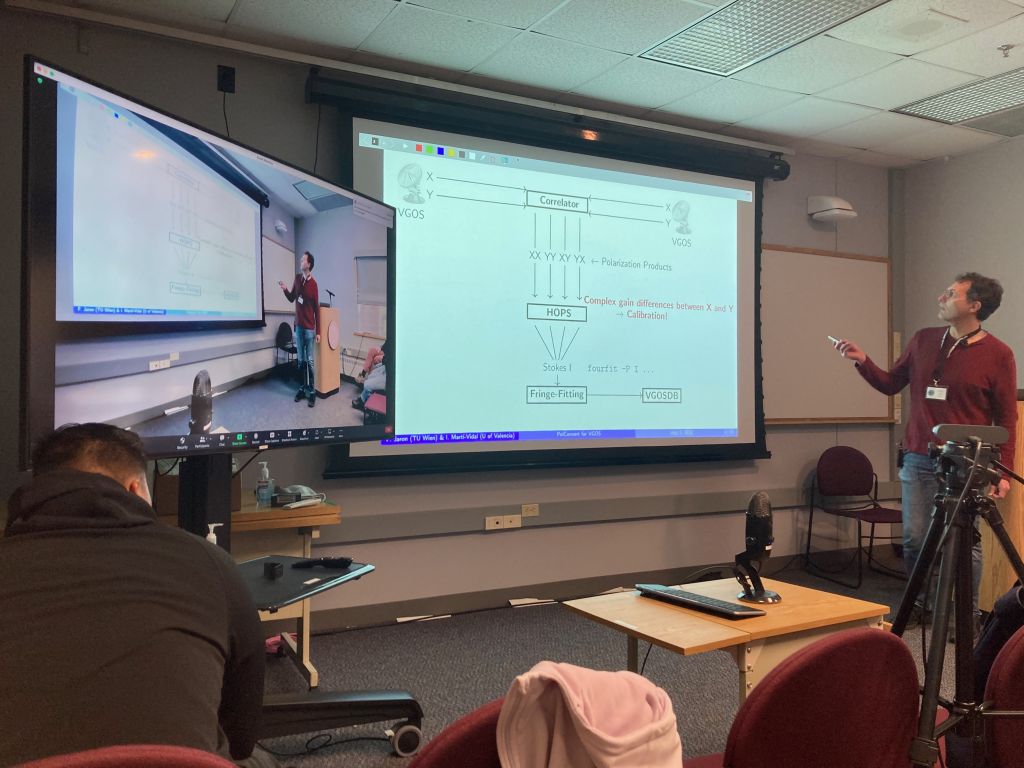
The 12th IVS Technical Operations Workshop (TOW) took place from April 30 through May 4 2023 at MIT Haystack Observatory in Westford, Massachussetts, USA. It was directly followed by a Correlator Workshop on May 4-5. Frédéric Jaron gave a lecture on the application of PolConvert to geodetic VLBI (VGOS) data at the TOW (see the picture), and a talk about results from a research and development VGOS session at the correlator workshop.
More information can be found here.
Bologna VLBI: Life begins at 40!
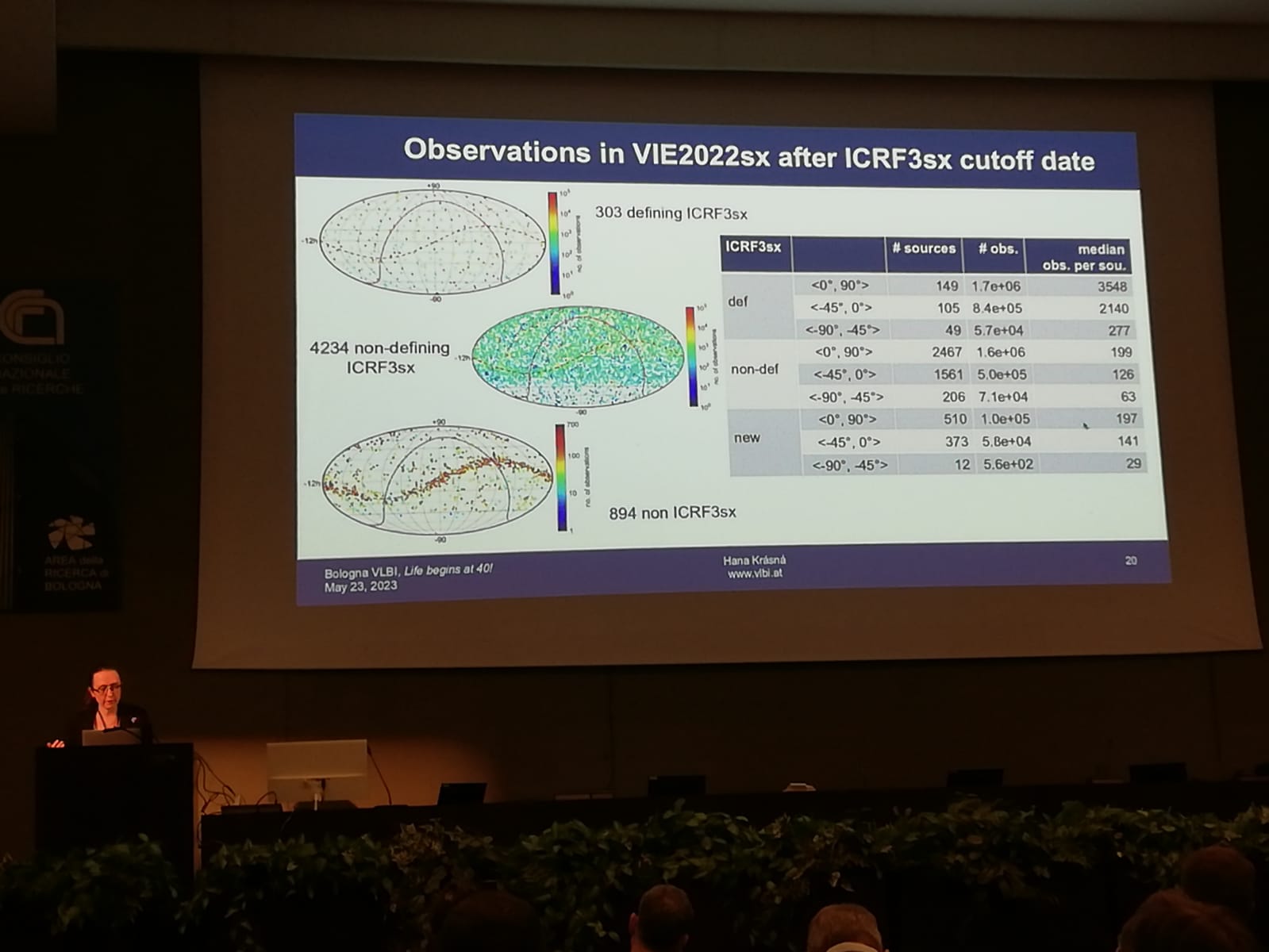
In the week of 22 to 26 May 2023, the radio astronomical conference of the VLBI community took place in Bologna, Italy on the occasion of the 40th anniversary of the 32-m radio dish in Medicina. Hana Krásná was invited by the Scientific Organizing Committee to give a keynote talk about the relevance and unique contribution of VLBI to geodetic and astrometric products.
More information can be found here.
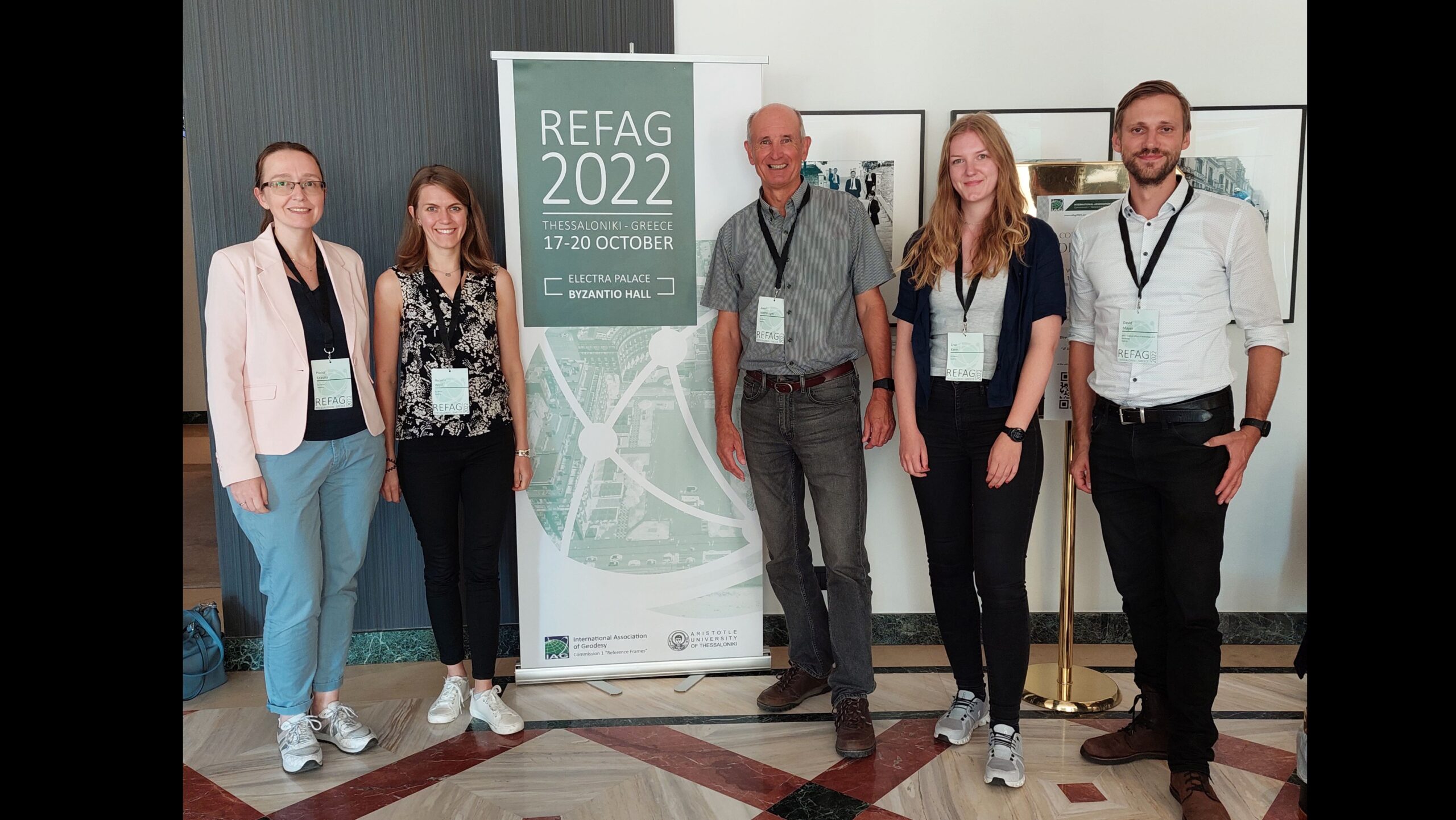
Vienna VLBI Group at REFAG 2022
- Adjustment of orbital elements of Galileo satellite arcs with simulated VLBI observations (presentation, Helene Wolf1 et al.)
- The importance of accurate a priori information for VLBI Intensive sessions (presentation, Lisa Kern1 et al.)
- Earth orientation parameters determined from Very Long Baseline Array experiments conducted at K-band (24 GHz) (poster, Hana Krasna1 et al.)
- Celestial reference frame determined from very long baseline interferometry experiments conducted at K-band (24 GHz) over the past 10 years (poster, Hana Krasna1 et al.)
- The Vienna VLBI contribution to the ITRF2020 (poster, David Mayer2 et al.)
More information on the REFAG2022, including abstracts and presentations, can be found here.
Paper on the evaluation of satellite observations with VLBI published
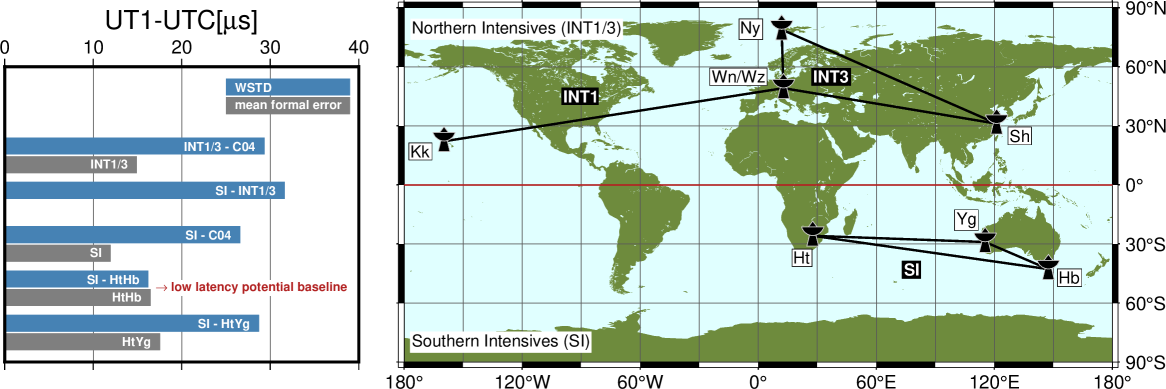
Paper on Southern Intensives for UT1 determination published
The need for stimulating global geodetic measurements with southern observatories served as a powerful motivation to launch the Southern Intensive (SI) program in 2020. The competitiveness of these SI sessions with routinely operated Intensive sessions has now been demonstrated in a paper published in Earth, Planets and Space.
Dr.-vlbi Jakob Gruber
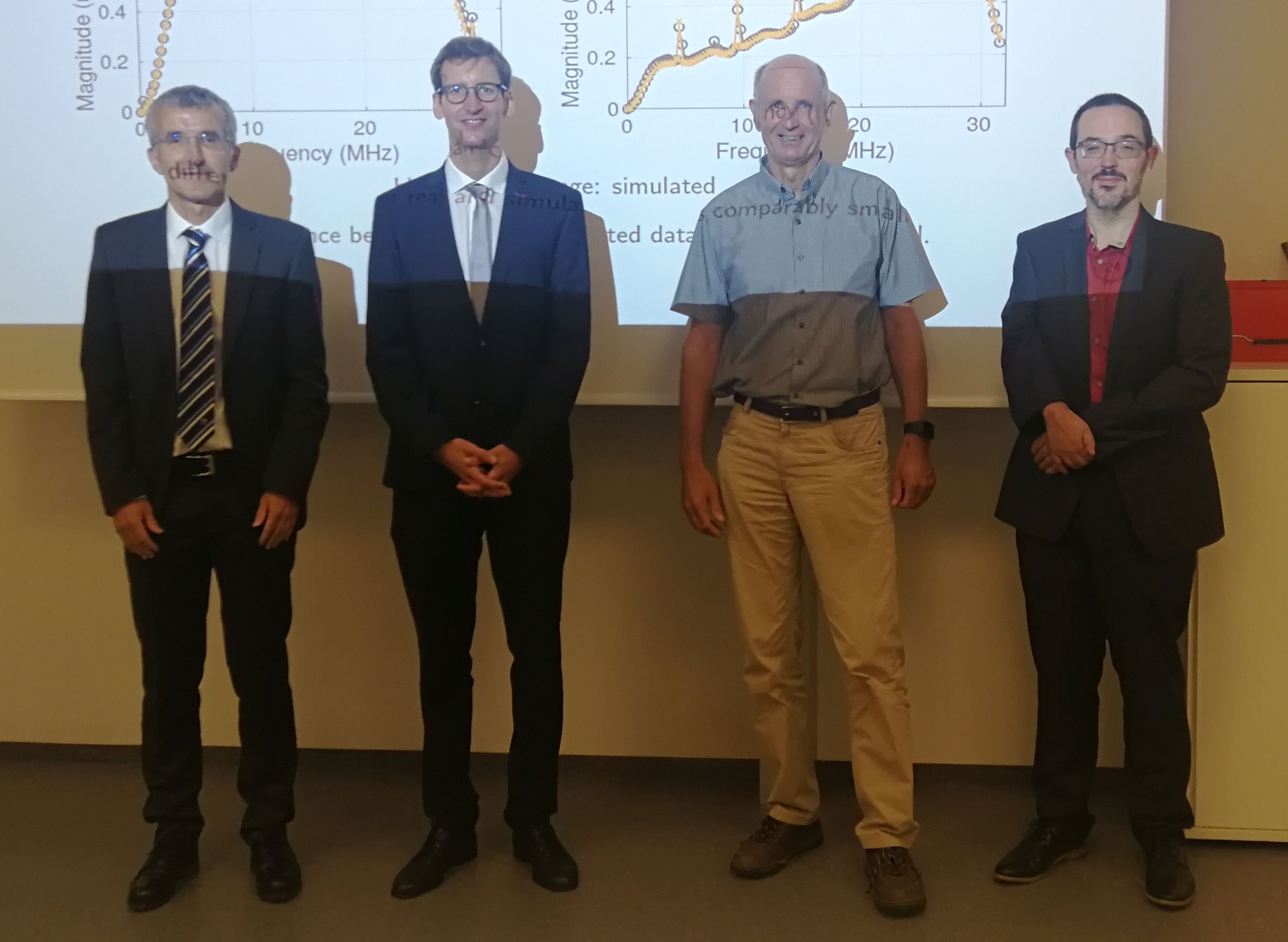
On June 30, 2022, Jakob Gruber successfully defended his PhD thesis on Raw Data Simulation and Correlation of VLBI data. After the presentation of his thesis, Jakob withstood the difficult questions from Axel Nothnagel, Jamie McCallum and Johannes Böhm. Congratulations and thanks for the nice party in Hof3! @tu_wien @geodepartment @j_boehm72