
NEWS
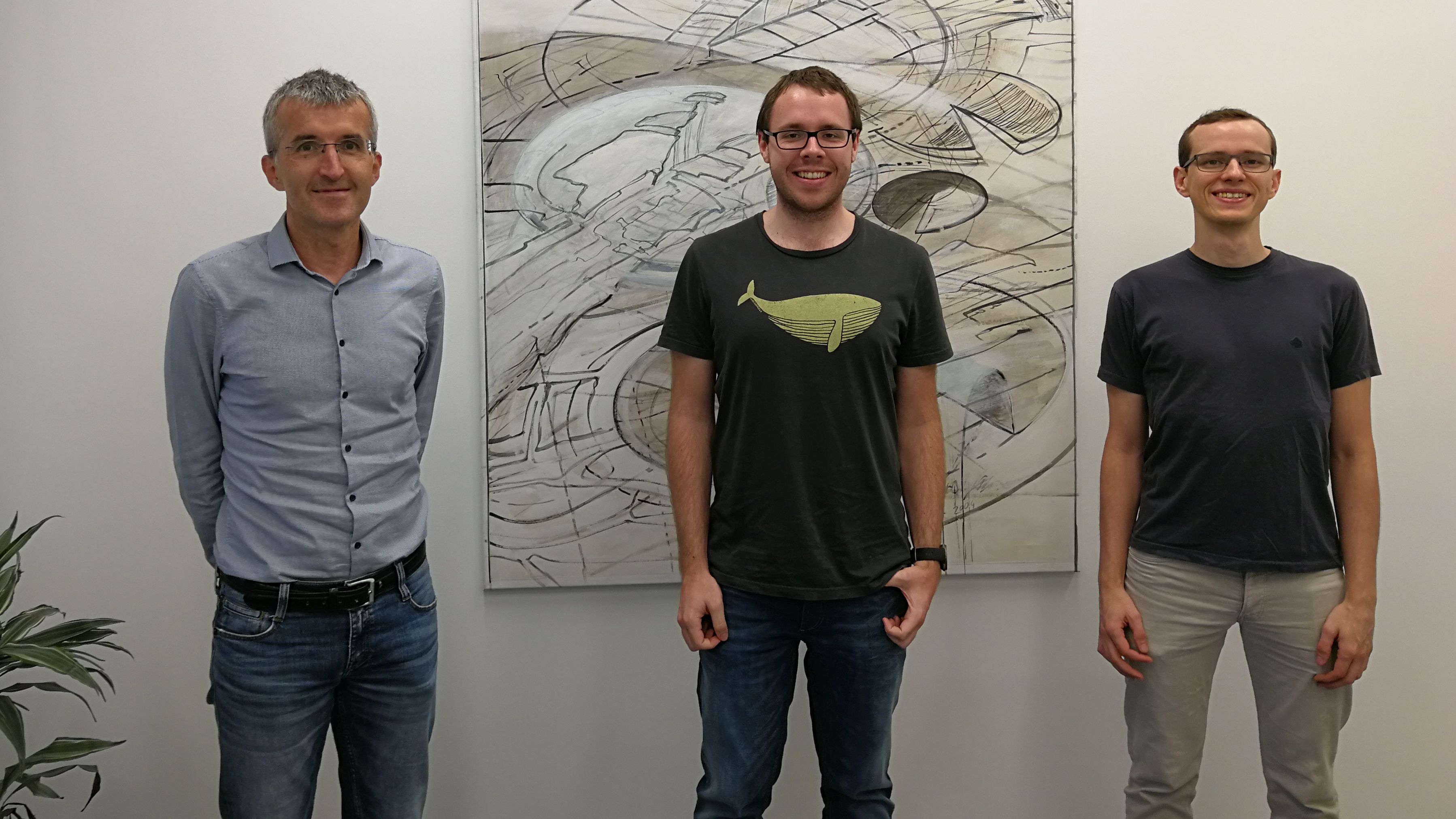
Benedikt Soja from ETH Zürich visiting TU Wien
While visiting his family in Vienna, Benedikt Soja stopped by for a chat at TU Wien. He also took the chance and talked to Matthias Schartner who will start in Benedikt’s group on space geodesy at ETH Zürich on October 1, 2020. Definitely, a close co-operation between our groups is guaranteed.
Paper on optimal VGOS station positions published
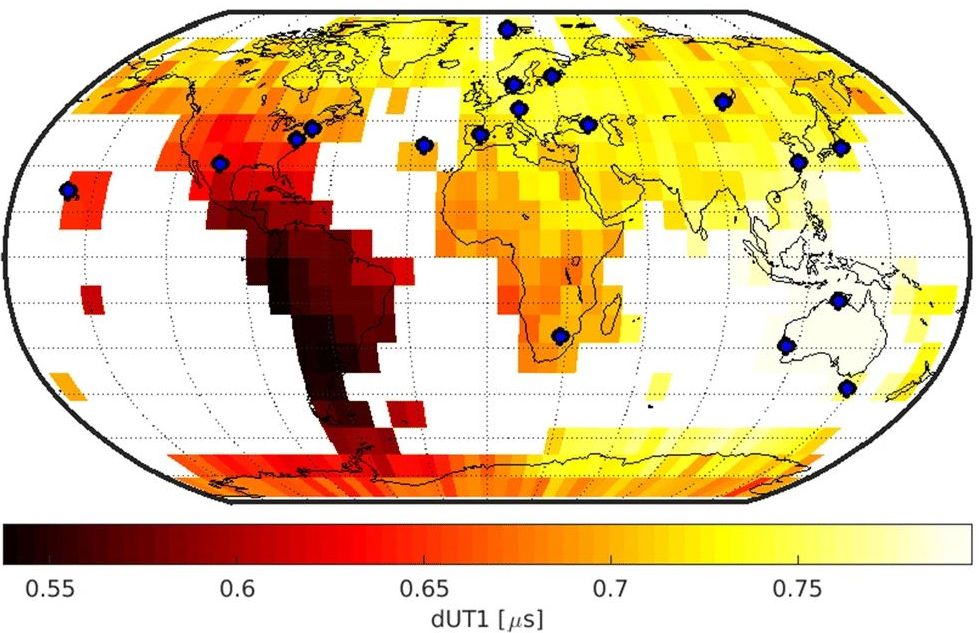
Do you want to know where new VGOS stations would best improve earth orientation parameters? Schartner et al. provide the answer in an article in Earth, Planets and Space.
VieVS YouTube tutorials online
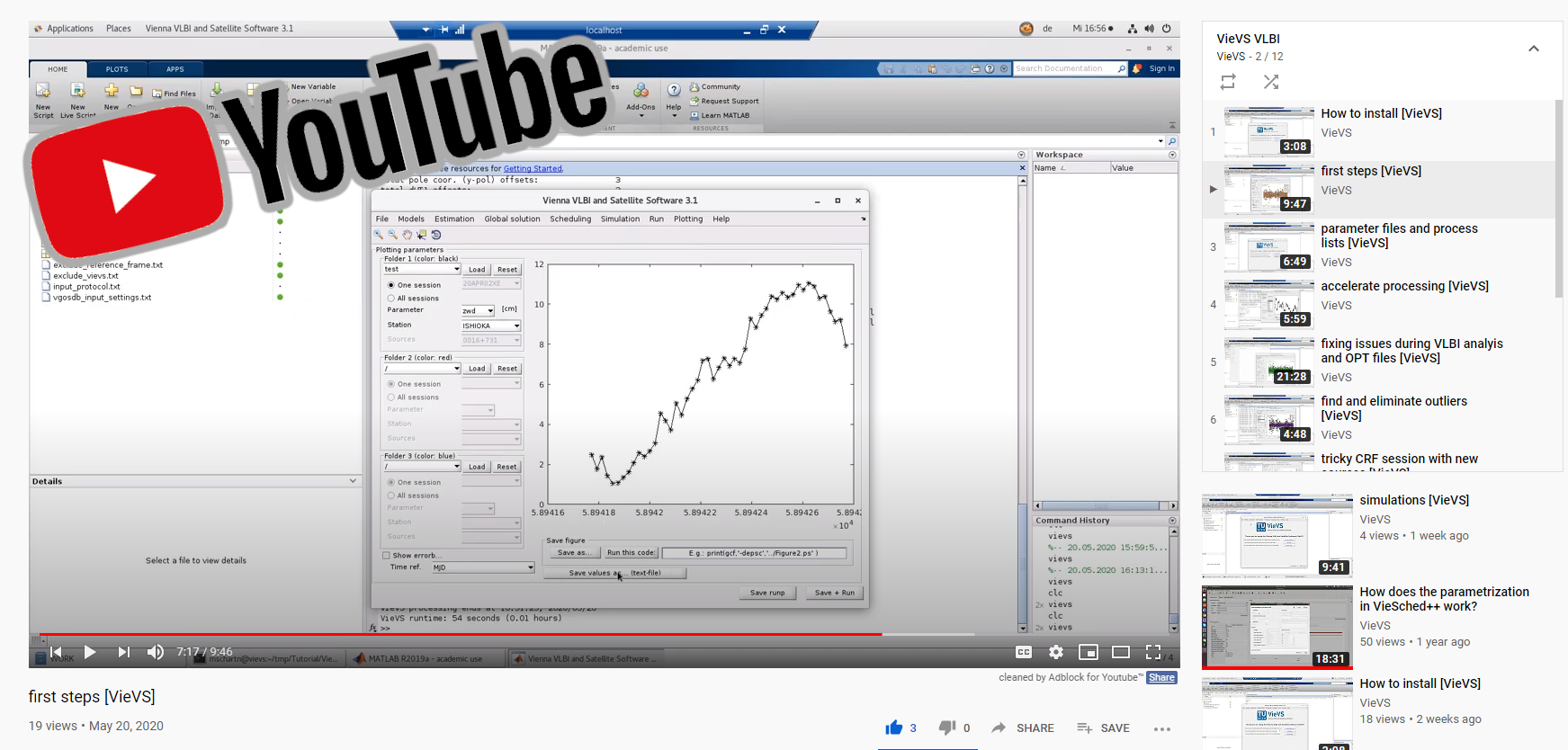
Finally, we found some time to record new videos for our VieVS YouTube channel.
In these videos, all aspects of the VieVS VLBI module are discussed and examples are shown.
This covers all major features of the VieVS VLBI software, including:
- session analysis (fixing clock breaks, removing stations, eliminating outliers…)
- 24-hour sessions
- intensive sessions
- investigating the results
- calculate and show baseline length repeatability
- display and output estimated parameters
- output SINEX files
- output EOP files
- access MatLab structures…
- efficient VieVS processing
- parameter files
- process lists
- accelerate processing
- calculate global solution
- simulations
- and more
Therefore, our VieVS VLBI videos are a good starting point if you want to learn how to use VieVS or if you want to learn VLBI analysis in general.
Link to the VieVS VLBI playlist
VieSched++ V1.0 released
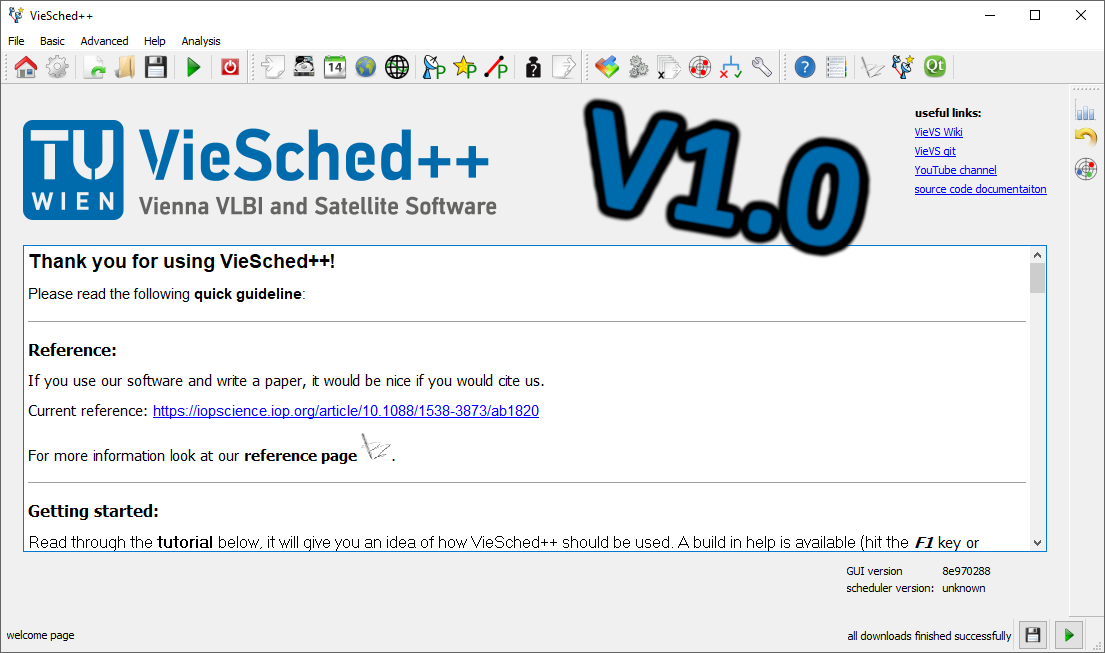
Many new features and enhancements over the last months made me decide to finally close the beta status of VieSched++ and go for a full release of VieSched++ as version 1.0.
VieSched++ is already widely used to schedule various observing programs, such as INT2, INT3, INT9, OHG, T2, AUA, CRDS, CRF, parts of EUVGOS, the former VGOS intensives VGOS-B, tests of mixed-mode observations AUM, and the former TRF sessions EUR and EURD. Furthermore, it is used to schedule special relativistic experiments and even VLBA sessions.
In total, almost 200 sessions were already scheduled with great success and the number is growing rapidly. To give an example: for the TRF sessions EURD and T2, it was possible to more than double the number of observations for the T2 sessions and greatly improve the sky-coverage of EURD, leading to a significant improvement in the estimated mean formal errors up to a factor of three.
The large variety of scheduled observing programs highlights the great flexibility VieSched++ offers. One core element of VieSched++ is its recursive scan selection which generates high-quality schedules. Furthermore, it is possible to use an iterative source selection algorithm to focus on observing an optimal set of sources for your session.
The big flexibility of VieSched++ comes from its unique way of setting up the parameterization: besides being able to individually assign parameters to every station, source and baseline, it is possible to change these parameters during the session. In total, VieSched++ offers over 50 different parameters as well as different observing strategies that allow you to automatically schedule calibration scans or use special algorithms for intensive sessions.
Choosing a good set of parameters for a session is a challenging task. Luckily, VieSched++ helps you to choose good parameters through its multi-scheduling feature. The multi-scheduling tool is one of the main reasons VieSched++ is able to generate highly optimized schedules.
Besides scheduling, VieSched++ is now able to very efficiently simulate VLBI schedules on the fly. Each schedule can be simulated with thousands of simulation runs providing not only good mean formal errors but also reliable repeatability values. These simulation results can be directly used to decide which schedule provides the best performance for your session and scientific goal or can be used for all kinds of simulation studies.
Using VieSched++ is very simple and intuitive through a modern GUI with a built-in help function. Additionally, we have a YouTube channel where we upload videos about VieSched++ and are starting to write “cookbooks” about how to use VieSched++ (I’m well aware that it is past time to upload new videos and promise to do this in the near future).
How do we see the future of VLBI scheduling? The short answer is: highly automated.
Therefore, we are now developing VieSched++ AUTO, a python script running on top of VieSched++ replacing the GUI. VieSched++ AUTO is meant to run as a daily cronjob. It automatically scans the IVS session master and generates schedules if needed. The schedules, together with useful plots and statistics, are sent via E-Mail to the person in charge to evaluate the result. In case the schedule looks good (which so far was the case for 100% of the automatically generated schedules) the schedule files are automatically uploaded to the IVS servers.
What is next? Well, I’m sure that there are still some minor bugs in the software and the GUI that have to be fixed but the next bigger projects are to further simplify and improve the schedule optimization and to include the possibility to schedule observations to artificial sources such as satellites or maybe even spacecraft.
Although we already added great support for VGOS observations (such as support for SNR based observation durations) it might be that we have to extend our algorithms to meet all requirements, especially when it comes to source imaging. However, I think it is more important to finally start using the new VGOS scheduling capabilities for real VGOS experiments instead of further optimize and enhance the algorithms without using them. There is already a lot that we could test and try to improve the session performance.
To conclude:
Version 1.0 is not the end of VieSched++. We will further enhance the software with new and improved features and hopefully attract a wider user base and help to improve VLBI in general.
All the best,
Matthias Schartner

Vienna VLBI group participates in EGU Sharing Geoscience Online
While the physical general assembly of the European Geosciences Union (EGU) in Vienna in the first week in May 2020 was cancelled for the COVID19 pandemic, an event called Sharing Geoscience Onine (SGO) was organized instead. In the mostly text-chat-based sessions, we had several contributions. You can find the displays on EGUSphere and in the Publications section here.
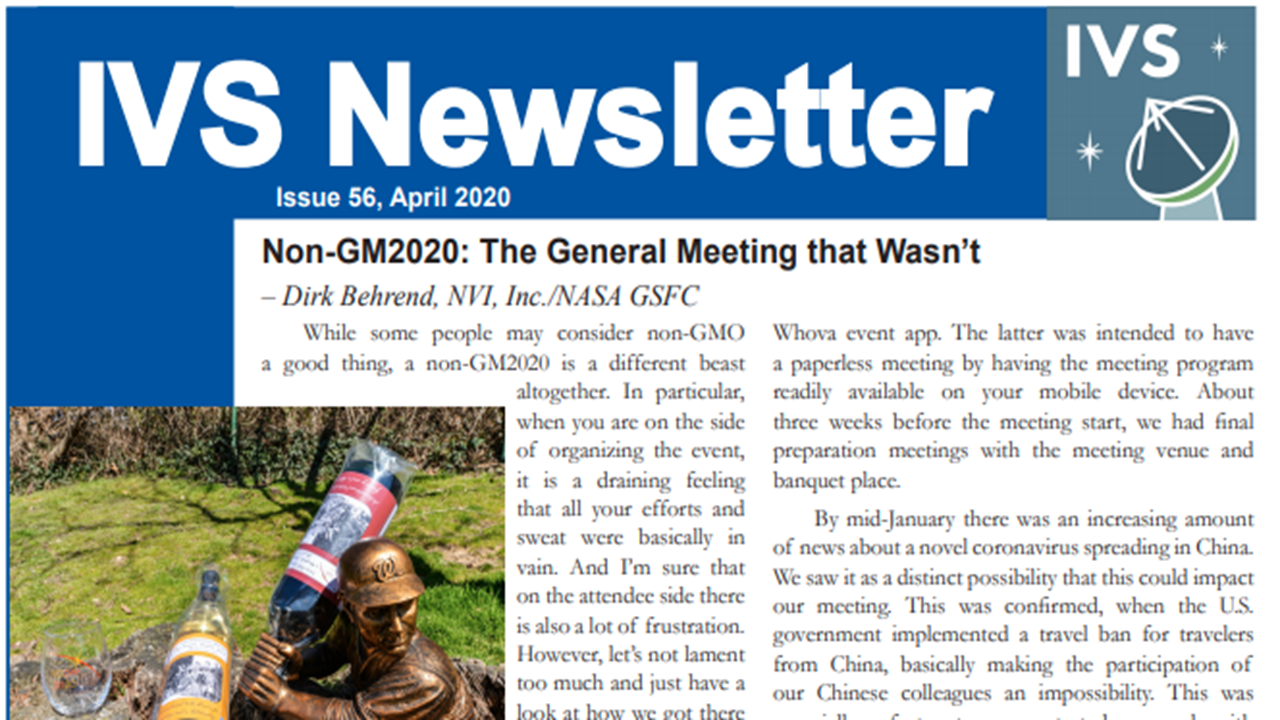
IVS Newsletter
The IVS newsletter features, besides other important topics, VGOS correlation activities at TU Wien carried out by Jakob. Enjoy reading!
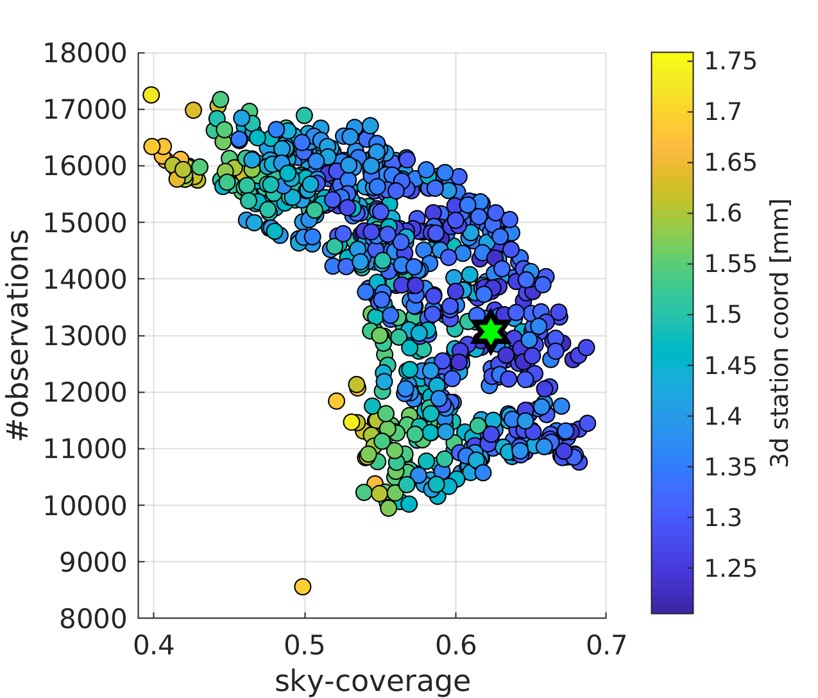
VGOS sessions scheduled in Wien
VieSched++, the new VieVS scheduling module, is used by Matthias Schartner for the generation of VGOS schedules for the International VLBI Service for Geodesy and Astrometry (IVS). Scientific investigations on optimizing VGOS schedules are published in Journal of Geodesy.
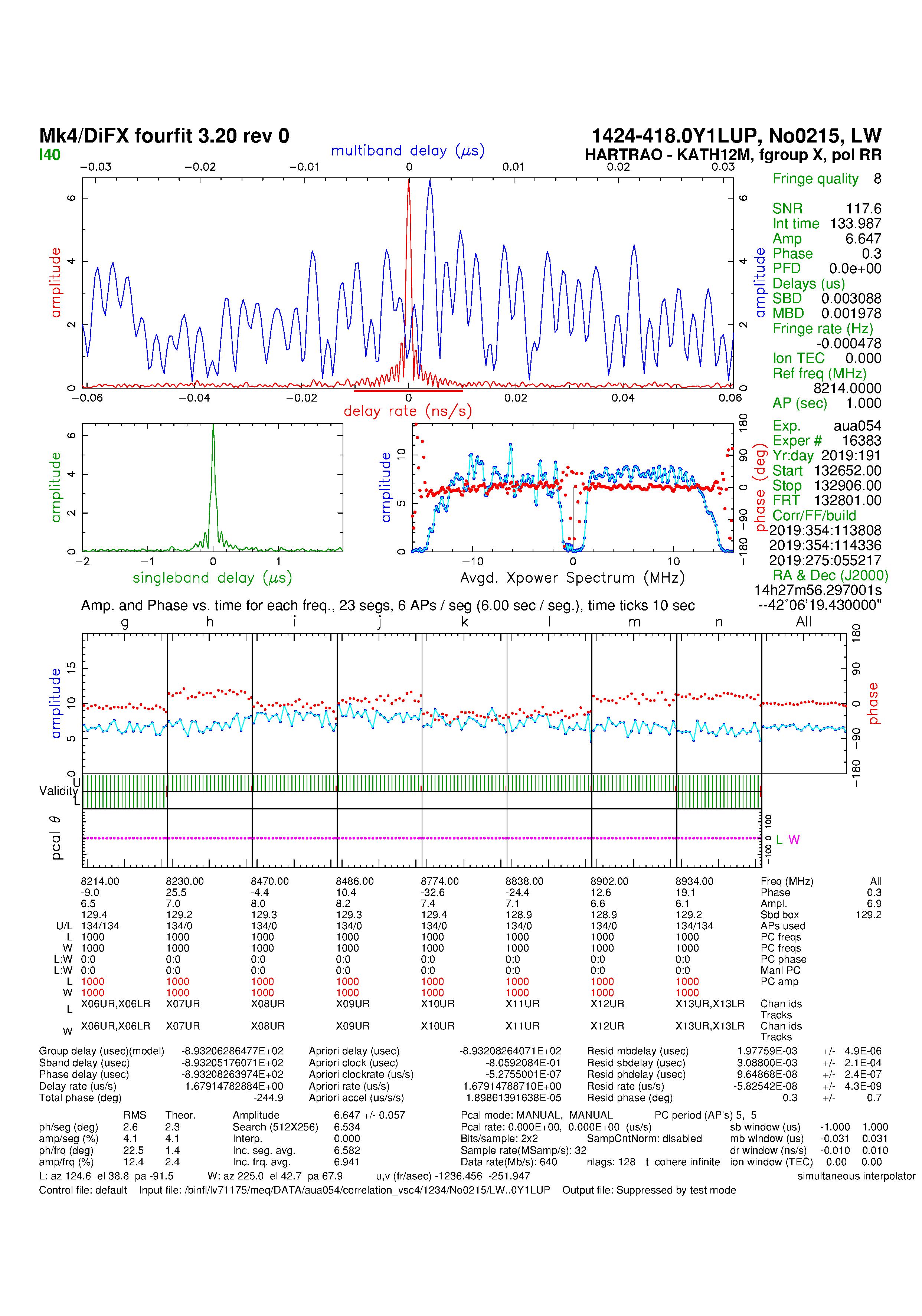
First light on the VSC-4
Just before Christmas, on December 20, 2019, 240 private cores of the VSC-4 dedicated for VLBI correlation could be used for the first time.
This test showed that DiFX 2.6 and HOPS-2.20 could have been installed successfully on the most powerful supercomputer in Austria currently available.
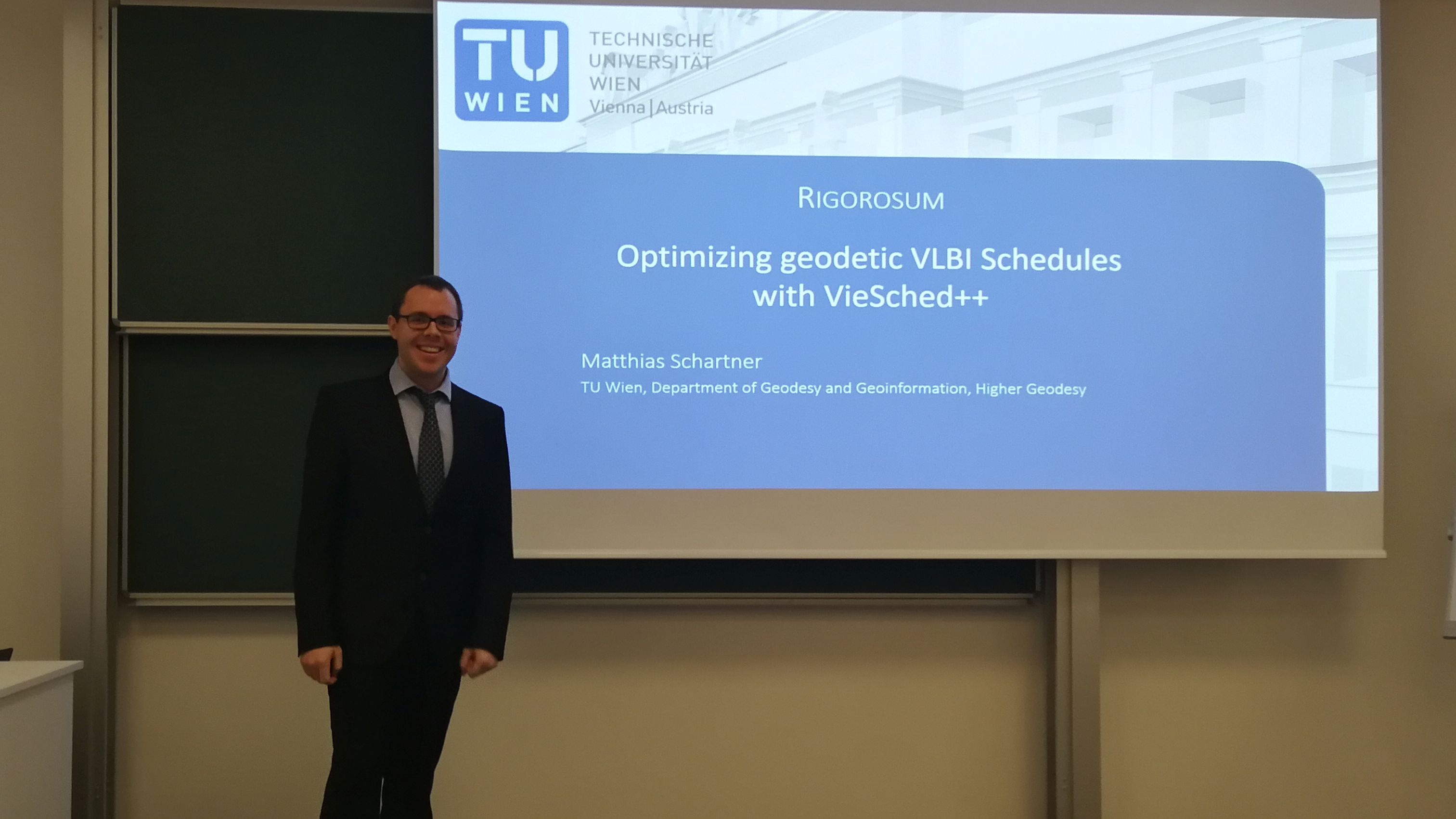
PhD Defense Matthias Schartner
On December 17, 2019, Matthias Schartner successfully defended his PhD thesis on scheduling VLBI observations. John Gipson, Axel Nothnagel, and Johannes Böhm challenged him with difficult questions, but Matthias masterfully answered all. Congratulations!
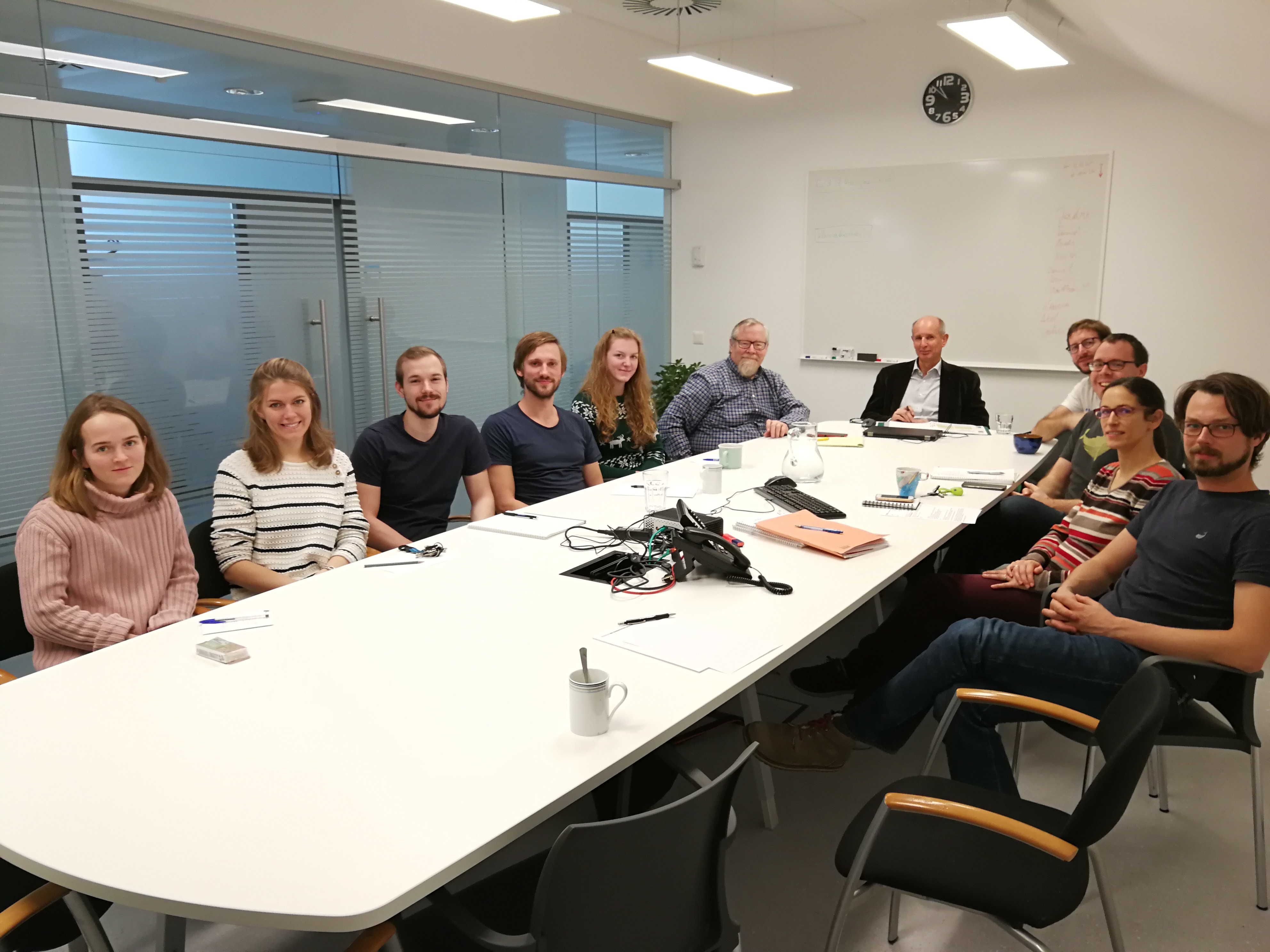
VLBI discussions with John Gipson
On the occasion of Matthias’ PhD defense, John Gipson from NVI/NASA GSFC visited the Vienna VLBI group. We took the chance to discuss the next steps for the generation of ITRF2020.